Keeping Your Bathroom Heaters Safe (And Dry)
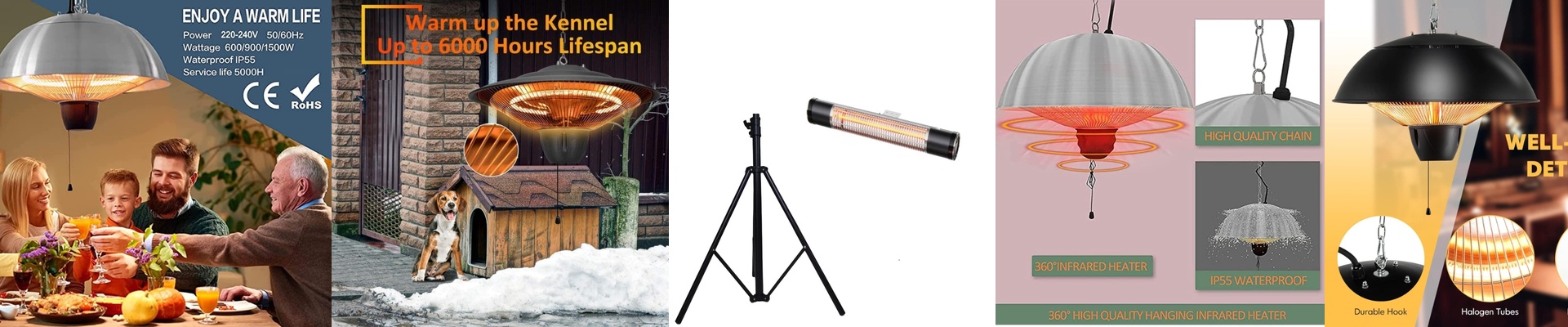
Putting infrared heaters in a bathroom is basically a fight against steam. You’ve got constant moisture in the air, and when you’re wiring these things up, the biggest headache is current leakage caused by condensation. To get that total electrical isolation, you can’t just hope for the best with “water-resistant” parts. You need a real, physical wall between the live terminals and the metal chassis. The deal with IP66 When you see an IP66 rating, it just means the box is built to keep out dust and high-pressure water jets. In your bathroom, that’s what stops steam from settling right on the heating element’s contact points. We use heavy-duty gaskets and reinforced cable glands to lock the humidity out. Why? Because if moisture creeps onto those terminals, you get “tracking”—which is just a fancy way of saying electricity is leaking across the insulator. To stop that, we use lamp holders made from materials that simply don’t soak up water. Heat, humidity, and the “shock” factor Most of these units use shortwave lamps. They hit full temperature almost instantly. The problem is that rapid heat-up causes things to expand and contract quickly, which can wreck your seals. That’s why we use silicone gaskets. They stay flexible and keep a tight grip even when the lamp is cycling on and off all day. And please, make sure the grounding is rock solid. We bond the outer casing directly to the building’s earth. It’s a safety net. If a seal ever fails and a live wire touches the housing, the breaker trips instantly. You want the power to cut out immediately, rather than having a chassis that’s live and waiting for someone to touch it. The trade-off Here’s the catch: when you seal a box this tightly, the heat has nowhere to go. A fully sealed IP66 housing traps way more heat around the internal wiring than an open heater would. Because of that, you can’t use cheap wire. You need the high-temp stuff—think PTFE or silicone-jacketed wiring—so the insulation doesn’t melt or get brittle over time. Just keep an eye on the enclosure size, too. If the box is too cramped, the heat builds up too much and your lamps won’t last nearly as long.